 Famous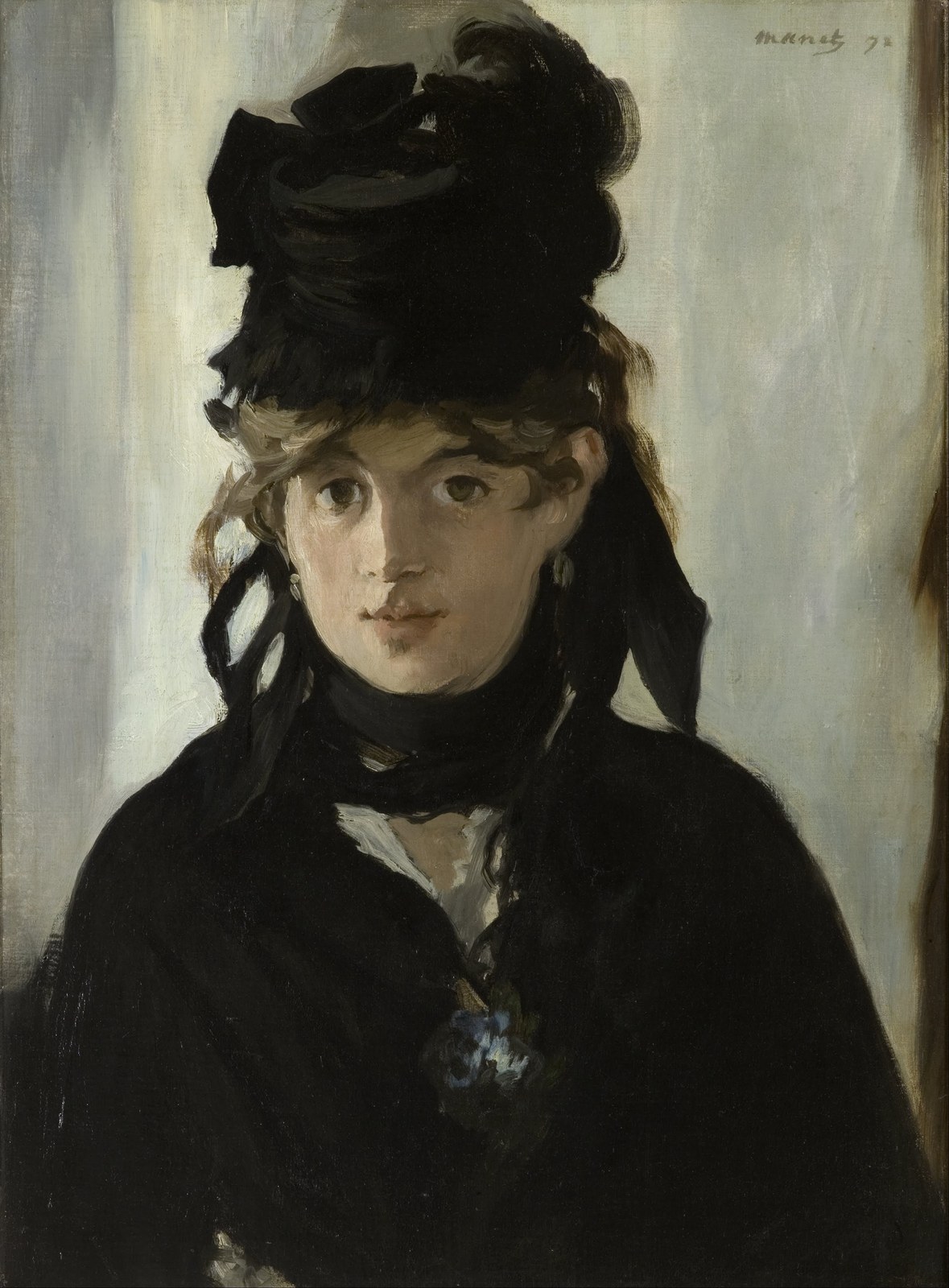
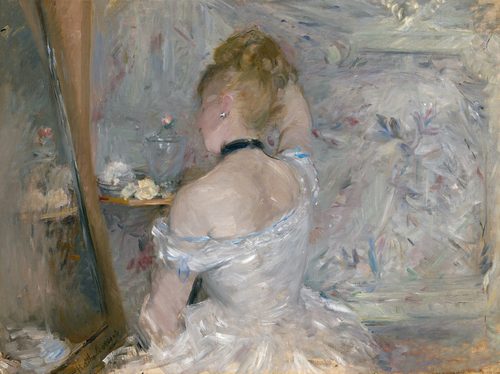
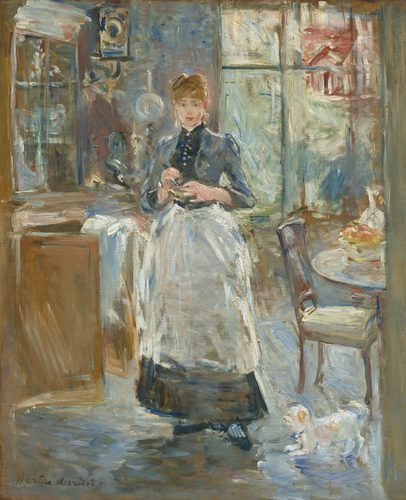
Berthe Morisot (1841–1895) was a founding member of the Impressionist movement and, by many accounts, its most technically daring painter, known for scenes of domestic and private life rendered in loose, rapid brushwork that looked startlingly unfinished to contemporary critics. Born in Bourges to an affluent family, she trained privately, since women were barred from the official École des Beaux-Arts, studying informally with Camille Corot and copying old masters at the Louvre.
She exhibited in most of the Impressionist group shows, more consistently than several of her male peers, and became close to Édouard Manet, whose brother Eugène she married in 1874. Her subjects centered on the world available to a bourgeois woman of her time — mothers and children, gardens, mirrors, women dressing — treated not as sentimental genre scenes but as sites of serious formal experiment.
She continued painting through motherhood and social obligation, remaining a central organizer within the Impressionist circle. She died in 1895 in Paris from pneumonia contracted while nursing her daughter Julie, leaving behind a body of work that took decades longer than her male colleagues' to receive full recognition.
How to recognize a Morisot
Rapid, open brushwork
Morisot left strokes visibly unblended and paint thin enough that bare canvas sometimes shows through, a speed and looseness of handling that shocked critics used to smoother, more carefully finished-looking pictures.
Women's private interiors
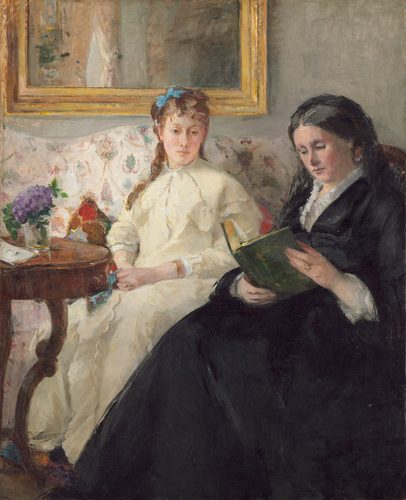
She painted dressing tables, nurseries, and drawing rooms from the inside, showing the private spaces and quiet routines of bourgeois women's daily life that were rarely depicted with such formal seriousness before her.
Mothers and children
Domestic tenderness between mothers, nurses, and children recurs throughout her work, observed closely and without sentimentality, often centered on her own daughter, Julie, as she grew from infancy into girlhood.
Gardens and terraces
Sunlit gardens, balconies, and terraces appear often, with figures placed loosely within greenery rather than posed formally against a plain backdrop, light breaking unevenly across leaves, ribbons, and pale fabric alike.
Pale, silvery palette
She favored soft whites, grays, and pastels over strong contrast, giving her interiors and garden scenes a hazy, breathing atmosphere rather than sharp definition or a heavily worked, dark studio finish.
Watercolor-like fluidity
Even working in oil, her paint often behaves like watercolor, thin and translucent in places, letting underlying tones and raw canvas texture show through the surface of the finished image.
The life
Berthe Morisot was born in 1841 in Bourges to a well-off family that valued art education for its daughters, though women were barred from the state-run École des Beaux-Arts. She and her sister Edma trained privately, studying with Camille Corot and copying paintings in the Louvre, where Morisot met Édouard Manet in 1868. The two became close artistic allies, and she posed for several of his paintings.
She joined the emerging Impressionist circle at its first independent exhibition in 1874, the same year she married Eugène Manet, Édouard's brother. Unlike several of her male colleagues, who skipped shows over disagreements, Morisot exhibited in most of the Impressionist exhibitions, missing only the 1879 exhibition, held months after the birth of her daughter, Julie.
Through the late 1870s and 1880s she painted steadily, focusing on domestic and garden scenes centered on women and children, developing an increasingly rapid, open brushwork that some critics found more radical than her male peers' work. She remained central to organizing the group's later shows. She died in Paris in 1895 from pneumonia contracted while nursing Julie through her own illness, leaving her daughter under the guardianship of the poet Stéphane Mallarmé, with the Impressionist circle remaining close to her.
Timeline
- 1841Born in Bourges
- 1857Begins private art training with her sister Edma
- 1868Meets Édouard Manet at the Louvre
- 1874Joins the first Impressionist exhibition; marries Eugène Manet
- 1878Birth of her daughter, Julie Manet
- 1881Paints Eugène Manet and His Daughter at Bougival
- 1892Holds her first solo exhibition
- 1895Dies in Paris
Most famous works
| Work | Date | Why it matters |
|---|---|---|
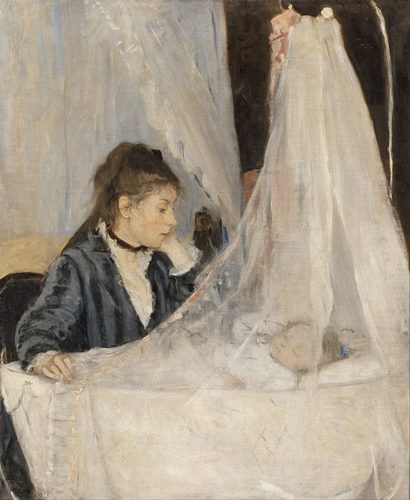
| The Cradle (Le Berceau) | 1872 | A mother watching over a sleeping infant, now considered one of Impressionism's defining images of motherhood. |
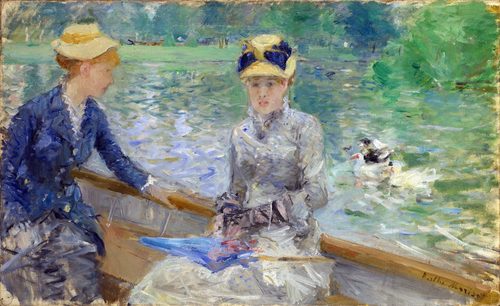
| Summer's Day (Jour d'été) | 1879 | Two women boating on a Paris lake, painted with quick, weightless strokes of blue and green. |
| The Butterfly Hunt | 1874 | A garden scene of women and children among trees, capturing dappled outdoor light with unusual freedom. |
| Woman at Her Toilette | c. 1875–80 | A hazy, silvery study of a woman dressing before a mirror, painted almost entirely in soft whites. |
| Eugène Manet and His Daughter at Bougival | 1881 | An intimate garden portrait of her husband and daughter that shows her mature, fluid late style. |
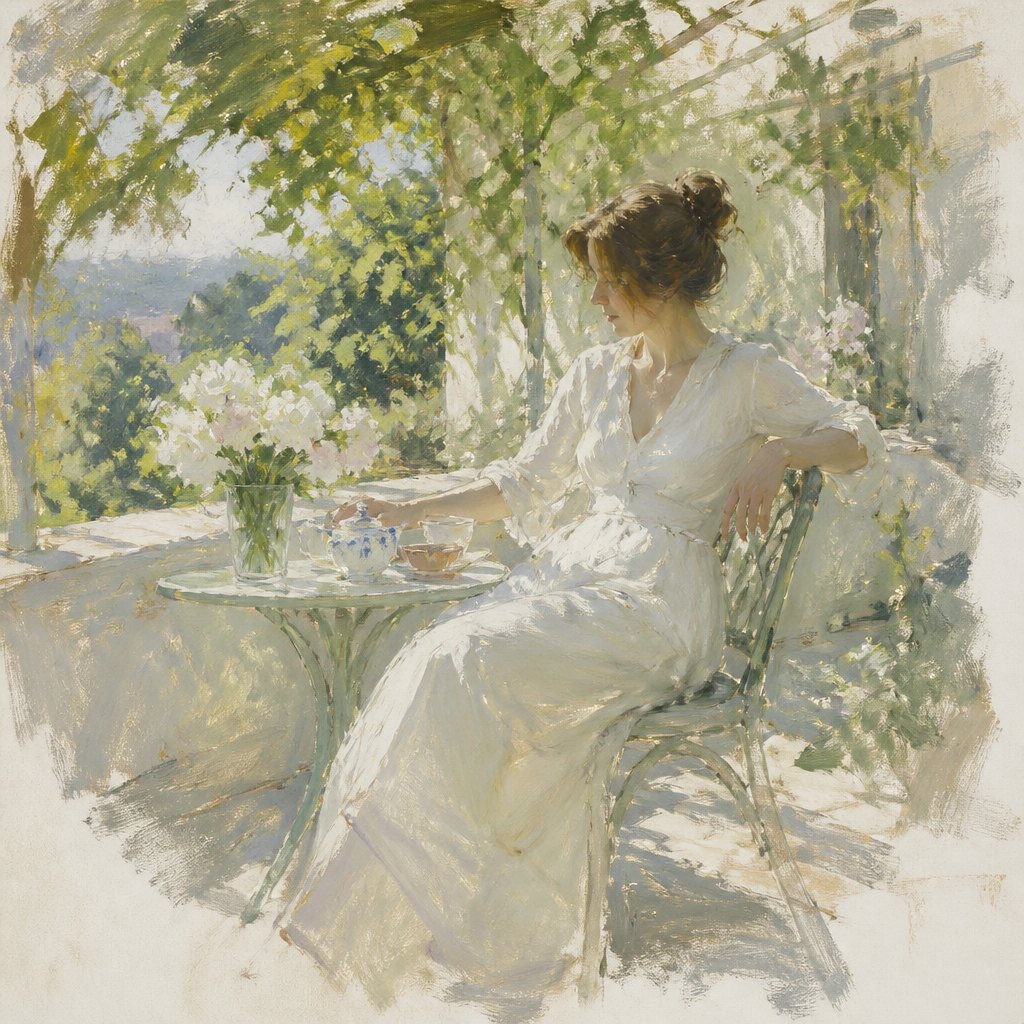 AI-generated
Create in the same spirit
Make Impressionism art of your own
This AI interpretation echoes the aesthetic world Berthe Morisot worked in — it depicts no real artwork. Generate your own with the Impressionism Art Style generator.
Open the Impressionism Art Style generator →Legacy
Morisot proved that Impressionism's radical brushwork could carry serious subject matter drawn from women's ordinary lives, not just landscape or spectacle, and her steady presence in the group's exhibitions helped hold the Impressionists together as a movement. Long undervalued relative to her male colleagues, she is now recognized as one of the founding figures of the group, with major museum retrospectives restoring her standing. Her example — painting domestic interiors and gardens as worthy of the same formal ambition as any landscape — opened space for later women painters to treat everyday private life as serious subject matter.
Frequently asked questions
What is Berthe Morisot famous for?
Morisot is famous as a founding Impressionist painter known for rapid, loose brushwork and scenes of women's domestic life — mothers, children, gardens, and interiors — painted with unusual technical freedom for her time.
Where can I see Berthe Morisot's paintings?
Her work is held at the Musée d'Orsay and Musée Marmottan Monet in Paris, the National Gallery of Art in Washington, and the Art Institute of Chicago, among other major collections.
What movement did Berthe Morisot belong to?
She was a founding member of Impressionism, exhibiting in most of the movement's independent Paris shows between 1874 and 1886, more consistently than most of her male colleagues.
How did Berthe Morisot die?
She died in Paris in 1895 from pneumonia contracted while nursing her teenage daughter, Julie, through her own illness.