 Famous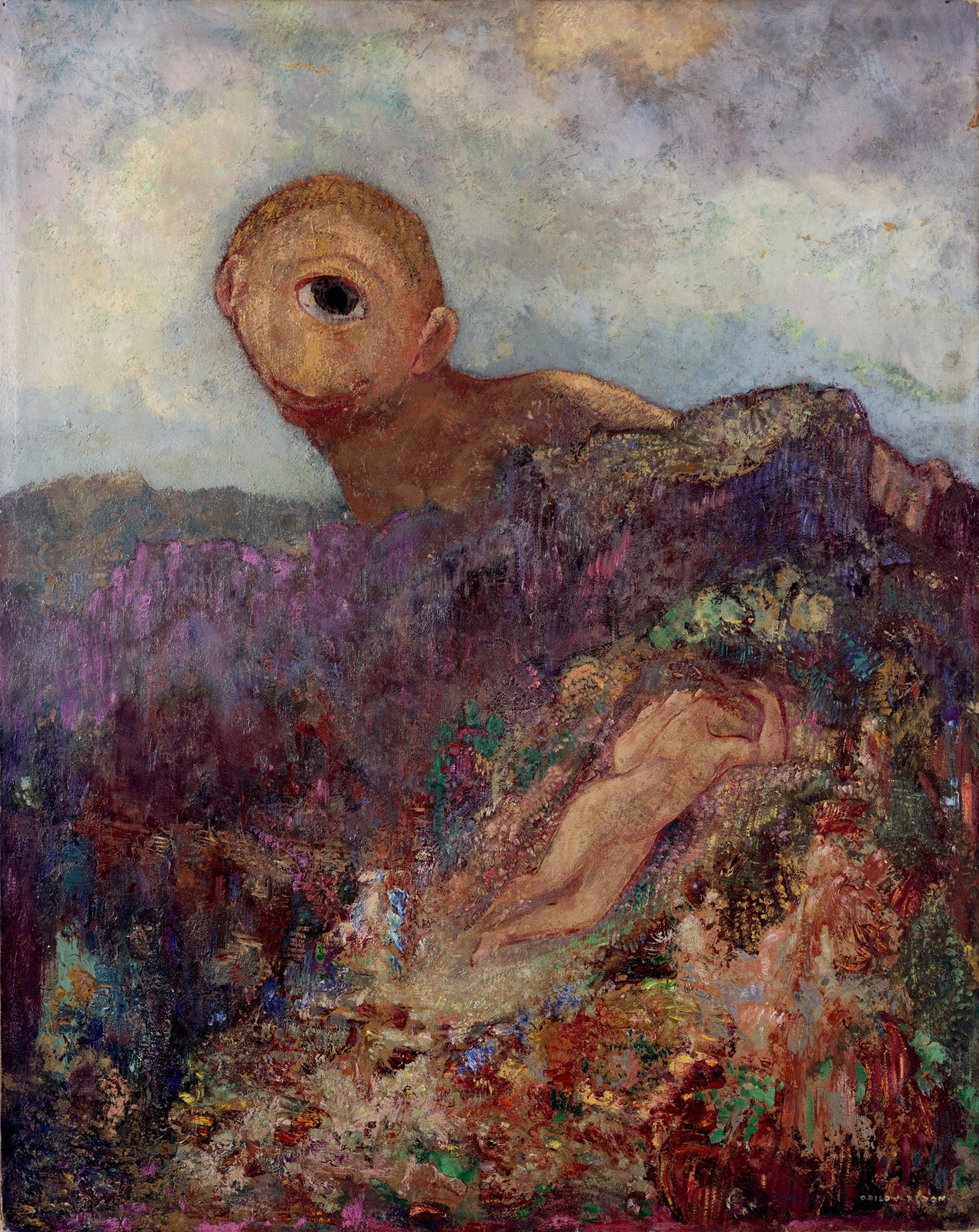

Odilon Redon (1840–1916) was a French Symbolist artist who spent his first two decades of mature work almost entirely in black and white, then reinvented himself from about the age of fifty as one of the era's great colorists — a career arc almost without parallel in modern art.
Trained partly in etching and lithography, Redon built his reputation in the 1880s and 1890s on what he called his 'noirs': charcoal drawings and prints of disembodied eyes, hybrid creatures, and spider-like beings drawn less from observation than from inner, dreamlike imagination. These works, gathered in print albums, made him a favorite of Symbolist writers who saw literature's own dream-logic mirrored in his imagery.
Around 1890, Redon began working in pastel and oil, abandoning black almost entirely for saturated color — flowers, mythological figures, and closed-eye visions rendered in glowing reds, blues, and golds. This late flowering brought him wider recognition, including praise from younger artists like Matisse, before his death in Paris in 1916, having quietly reshaped what Symbolist and later Surrealist imagination could look like.
How to recognize a Redon
Solitary floating eyes
A single detached eye, often winged or afloat like a balloon, recurs across Redon's black-period work — an unsettling, dreamlike symbol of inner vision he returned to obsessively in charcoal and lithograph.
Velvety black charcoal
His early 'noirs' use charcoal smudged and built into deep, soft blacks rather than hard lines, giving spiders, skulls, and hybrid creatures a smoky, sfumato-like presence that seems to hover on the page.
Hybrid dream creatures
Redon invented beings that fuse human, insect, and plant forms — a smiling spider with a face, a winged head without a body — treating them plainly, as if documenting visions rather than inventing monsters.
Luminous late pastels
After 1890, Redon shifted to pastel and oil in glowing color, building flowers and mythic figures out of powdery, blended reds, blues, and golds that seem to radiate light from within the canvas.
Closed eyes, inward gaze
Many of his figures, especially in the late work, appear with eyes shut or downcast, faces turned toward some inner vision rather than the viewer — a recurring gesture of contemplation and withdrawal.
Symbolist flower still lifes
In his final years Redon painted bouquets — wildflowers, poppies, and blooms in glass vases — with the same visionary intensity as his monsters, color used less for botanical accuracy than for pure feeling.
The life
Odilon Redon was born in Bordeaux in 1840 and had an isolated, sickly childhood, raised largely apart from his parents on a family estate. He trained briefly in architecture and painting before turning to printmaking, studying etching under Rodolphe Bresdin, who introduced him to the fantastical, meticulous black-and-white imagery that would define his early career.
Through the 1880s and 1890s, Redon produced albums of charcoal drawings and lithographs — his 'noirs' — populated by disembodied eyes, spiders, and dream creatures, work that found its audience among Symbolist poets and writers such as Joris-Karl Huysmans, who praised him publicly. He remained on the margins of the Impressionist-dominated art world of his time, pursuing an entirely different, interior vision.
Around 1890, in his fifties, Redon's work underwent a striking transformation: he turned to pastel and oil and to color, producing luminous flower paintings, mythological scenes, and closed-eyed visions that departed almost completely from his earlier darkness. This late period brought growing recognition, including a major room at the 1904 Salon d'Automne. He continued painting until his death in Paris in 1916, having moved from the era's most private imagination to some of its most radiant color.
Timeline
- 1840Born in Bordeaux, France
- 1864Studies etching under Rodolphe Bresdin
- 1879Publishes first lithograph album, 'Dans le Rêve'
- 1882Exhibits his charcoal 'noirs' in Paris
- 1890Turns from black-and-white to pastel and color
- 1899Shows pastels at Durand-Ruel alongside the Nabis
- 1904Given a dedicated room at the Salon d'Automne
- 1916Dies in Paris
Most famous works
| Work | Date | Why it matters |
|---|---|---|
| The Cyclops | c. 1914 | A tender, oversized cyclops peers down at a sleeping nymph, one of his best-known late mythological paintings. |
| The Eye Like a Strange Balloon | 1882 | A detached eyeball floats skyward atop a balloon, an iconic image from his early charcoal and lithograph 'noirs.' |
| Spider | 1887 | A grinning, human-faced spider rendered in charcoal, among the most unsettling of his hybrid dream creatures. |
| Ophelia Among the Flowers | c. 1905-08 | A pastel dreamscape blending a literary heroine with radiant, loosely painted blooms. |
| Buddha | c. 1906-07 | A luminous pastel study showing his late turn toward serene, meditative color and spiritual subjects. |
| Vase of Flowers | c. 1910 | One of many glowing late still lifes that made him celebrated as a colorist in his final decade. |
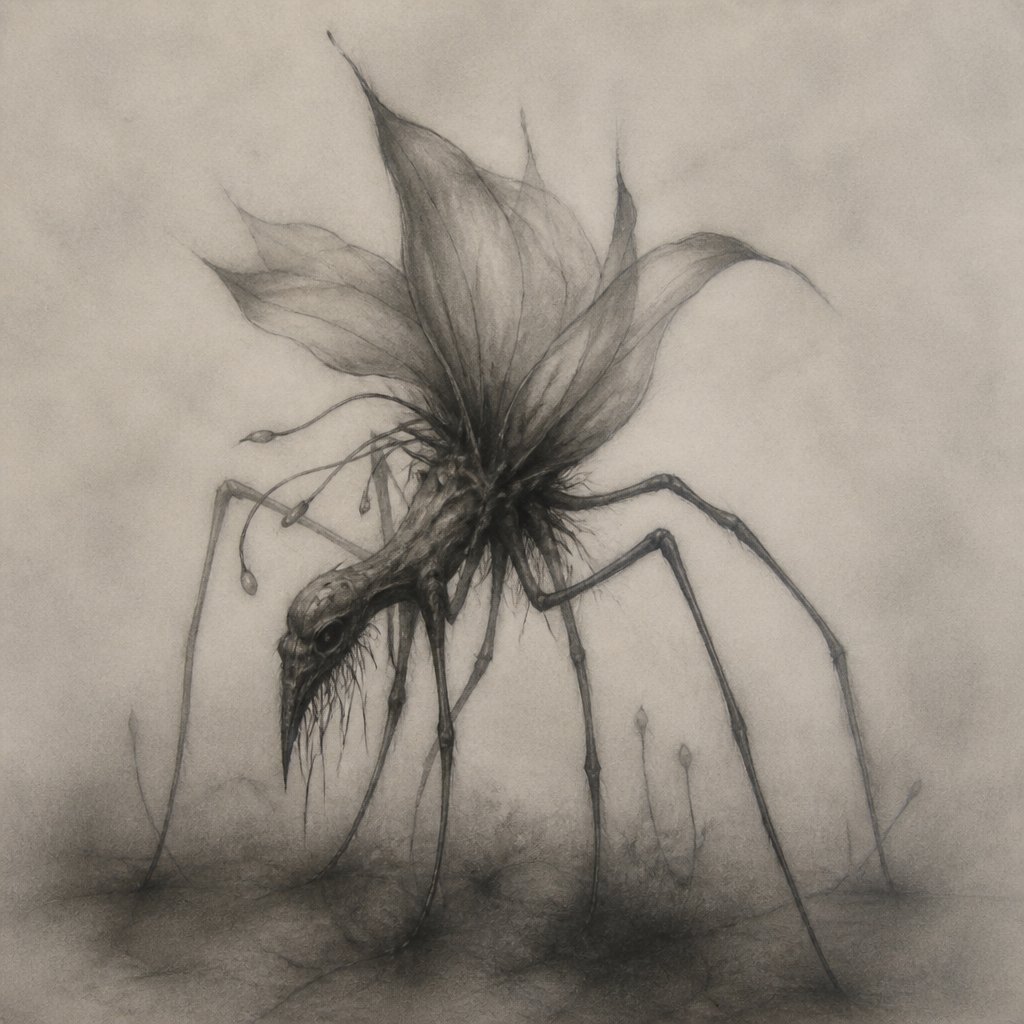 AI-generated
Create in the same spirit
Make Symbolism art of your own
This AI interpretation echoes the aesthetic world Odilon Redon worked in — it depicts no real artwork. Generate your own with the Symbolism Art Style generator.
Open the Symbolism Art Style generator →Legacy
Redon's insistence that art could picture the inner life rather than the visible world made him a touchstone for Symbolist painters and writers, and later for the Surrealists, who claimed his eyes and hybrid creatures as ancestors of their own dream imagery. His late turn to radiant color also offered a bridge between Symbolism and the coming generation of colorists, including admirers like Matisse. Today his charcoal 'noirs' and glowing pastels are treated as two halves of one restless imagination — proof that an artist could remake his own visual language in late life and still be believed.
Frequently asked questions
What is Odilon Redon famous for?
Redon is famous for two distinct bodies of work: haunting black-and-white charcoal drawings of floating eyes and dream creatures, and, later in life, luminous pastel flowers and mythological scenes in radiant color.
Where can you see Odilon Redon's work?
The Musée d'Orsay in Paris holds a major collection, along with the Art Institute of Chicago, MoMA in New York, and the Kröller-Müller Museum in the Netherlands.
Why did Redon's style change so dramatically?
Around age fifty, Redon began working in pastel and oil, shifting from his early charcoal 'noirs' to vivid color — a change scholars link to a happier personal life and renewed engagement with nature.
What art movement is Odilon Redon associated with?
Redon is a central figure of Symbolism, though his early career sits apart from Impressionism, and his imaginative, dream-derived imagery later influenced the Surrealists directly.