 Famous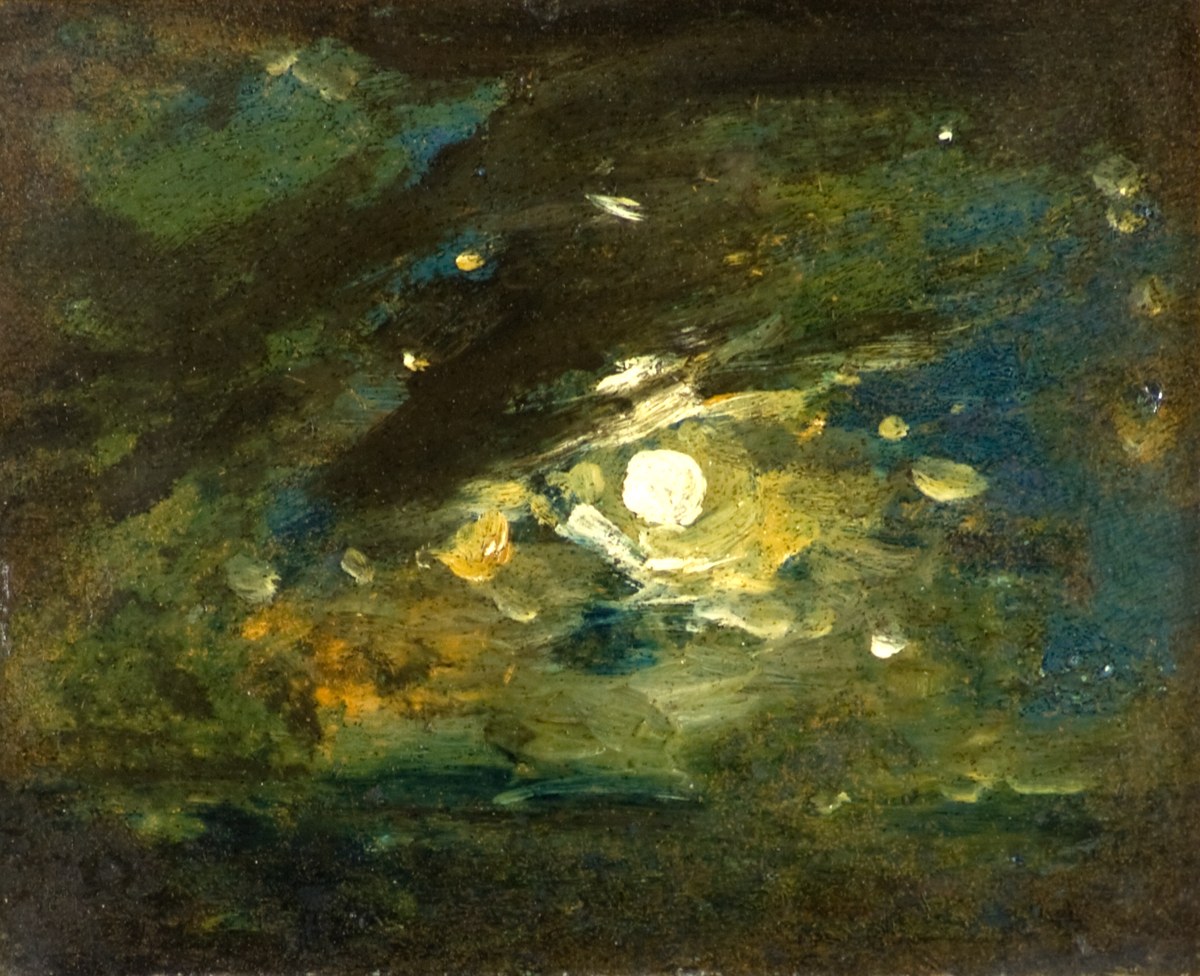
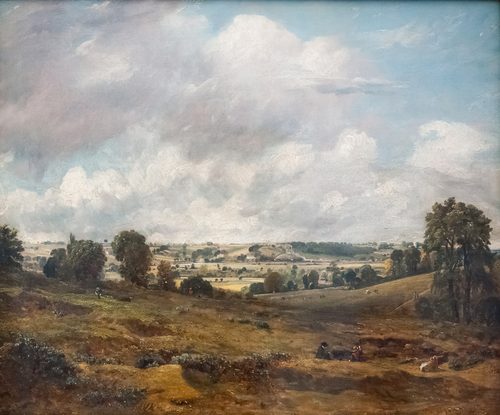
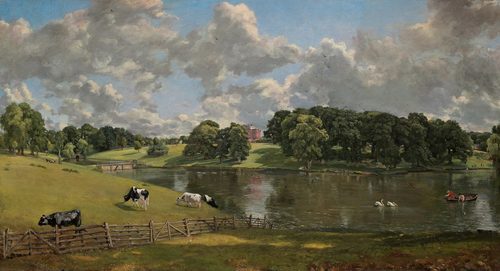
John Constable (1776–1837) was an English Romantic painter who spent his career studying the ordinary farmland of his native Suffolk with an attention to weather that had no real precedent in British landscape painting. Born in East Bergholt to a prosperous corn merchant, he trained at the Royal Academy Schools but found his subject close to home: the mills, locks, and hay barges of the Stour valley his family's business depended on. He worked from oil sketches made outdoors and full-size trial sketches painted indoors, then reworked them into finished "six-footer" canvases in the studio, a method that kept his exhibited paintings unusually fresh and immediate. Clouds fascinated him particularly; he filled notebooks with dated, timed studies of sky and weather, treating meteorology almost as a second discipline. Recognition came slowly in England, he was not elected a full Royal Academician until fifty-two, but The Hay Wain won a gold medal at the 1824 Paris Salon and influenced a generation of French landscape painters. He married Maria Bicknell in 1816 after a seven-year courtship opposed by her family, and was devastated by her death from tuberculosis in 1828. He died suddenly in London nine years later.
How to recognize a Constable
Working Skies
Constable treated clouds as a subject in their own right, filling sketchbooks with dated studies of specific weather; his finished skies carry real meteorological detail rather than generic backdrop drama.
Suffolk Subjects
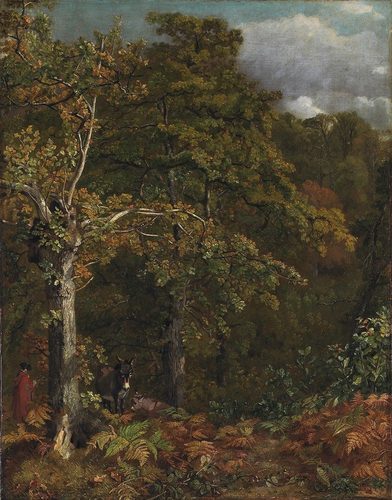
He returned obsessively to the same stretch of the Stour valley, its mills, locks, cottages, and hay barges, painting the working farmland of his childhood rather than grand or exotic scenery, revisiting a handful of views again and again over decades.
Full-Scale Sketches
Before finishing a major canvas he painted a full-size oil sketch in the studio, loose and rapid, working up small outdoor studies to settle light and composition; these sketches are now prized for their freshness and immediacy.
Flecked, Broken Light
He dragged small touches of white and pale color across foliage and water to suggest damp, shifting light, a technique nicknamed his 'snow' by critics who found it unfinished-looking at the time.
Everyday Rural Life
Farmhands, cart horses, dogs, and washerwomen appear going about ordinary labor rather than posed for effect, caught mid-task and unaware of the viewer, giving his landscapes a documentary quality closer to reportage than to idealized pastoral painting.
Damp, Green Naturalism
His palette favors deep, saturated greens and browns rather than the golden, varnished tones landscape painters had inherited from the Old Masters, aiming for the specific color of wet English grass.
The life
Constable was born in 1776 in East Bergholt, Suffolk, the son of a wealthy corn merchant who owned the mills along the River Stour that would later fill his canvases. He entered the Royal Academy Schools in 1799 but resisted the fashionable taste for Italianate or dramatic scenery, choosing instead to paint the working farmland he had grown up in.
His method set him apart: he sketched in oil outdoors, direct and rapidly brushed, then in the studio built those studies up through full-size oil sketches into his large finished paintings. Clouds and weather absorbed him almost as a scientific study, and his notebooks record specific dates, times, and wind directions alongside sketches of sky. Recognition in England came slowly and late, he was elected a full Royal Academician only in 1829, at fifty-two, but The Hay Wain, shown at the 1824 Paris Salon, won a gold medal and impressed French painters more than his own countrymen.
His personal life was marked by a long, difficult courtship: he married Maria Bicknell in 1816 after her family's objections delayed the match for seven years, and the couple had seven children. Her death from tuberculosis in 1828 affected him deeply, and his later paintings grow darker and more turbulent. He died suddenly in London in 1837, at sixty.
Timeline
- 1776Born in East Bergholt, Suffolk.
- 1799Enters the Royal Academy Schools.
- 1816Marries Maria Bicknell after a long courtship.
- 1821Exhibits The Hay Wain at the Royal Academy.
- 1824The Hay Wain wins a gold medal at the Paris Salon.
- 1828Maria Bicknell Constable dies of tuberculosis.
- 1829Elected a full Royal Academician at fifty-two.
- 1837Dies suddenly in London.
Most famous works
| Work | Date | Why it matters |
|---|---|---|
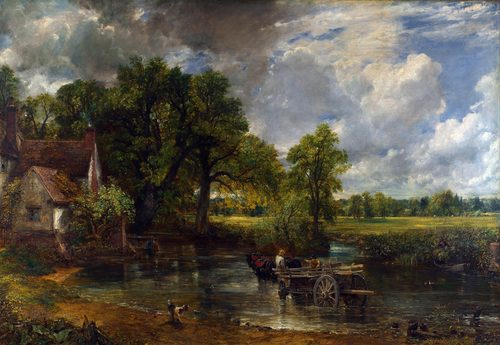
| The Hay Wain | 1821 | His best-known image of rural Suffolk, more celebrated in France than in England at first. |
| The White Horse | 1819 | The first of his large exhibition canvases built from full-scale outdoor oil sketches. |
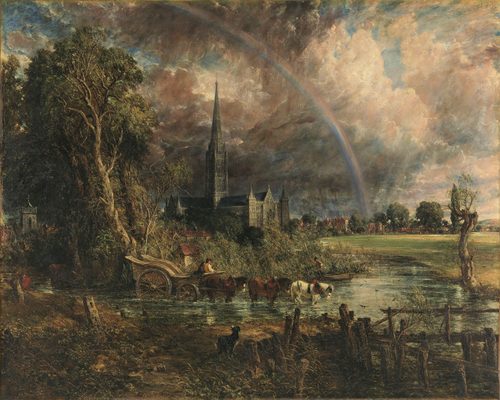
| Salisbury Cathedral from the Bishop's Grounds | 1823 | A commissioned view balancing architectural precision with restless, weather-heavy sky. |
| The Leaping Horse | 1825 | A barge horse mid-jump on the Stour, full of the energy of working river life. |
| Dedham Vale | 1828 | A late return to the view near his childhood home, deepened by years of study. |
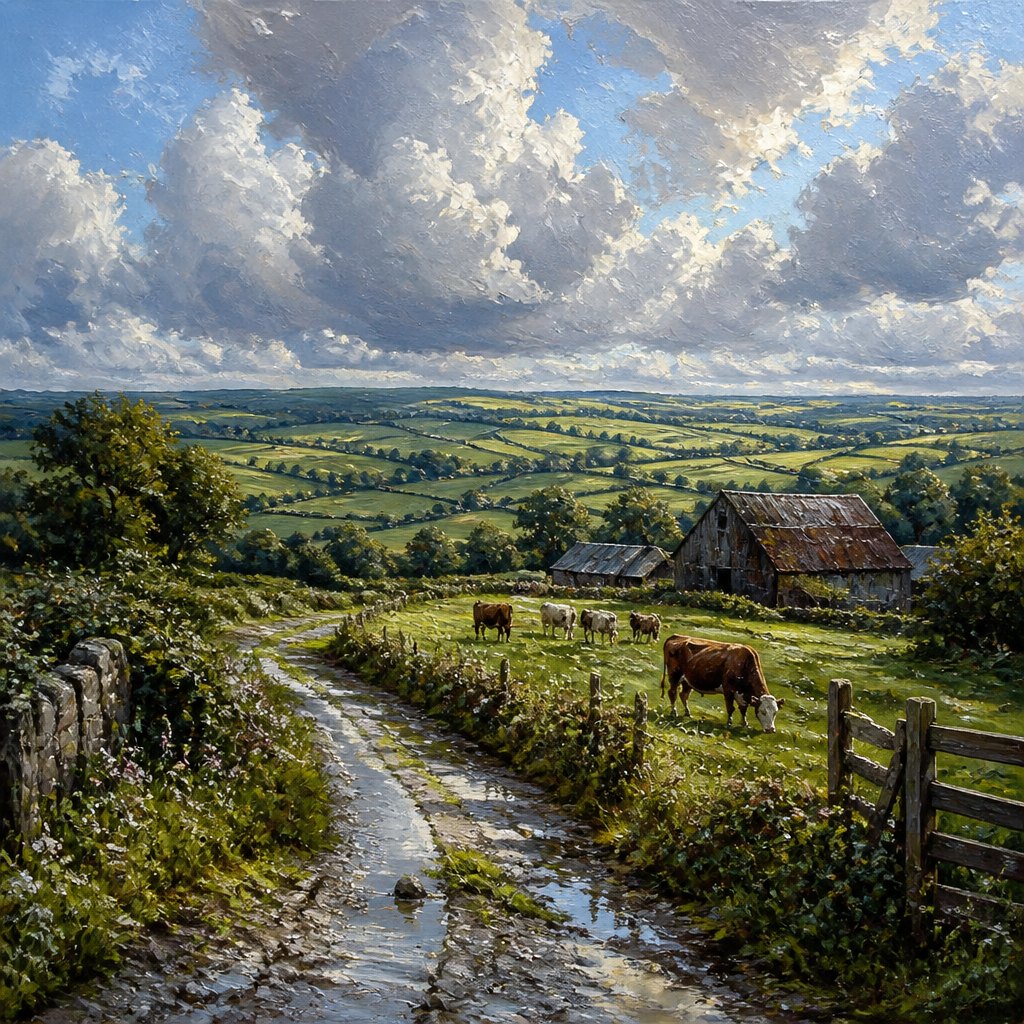 AI-generated
Create in the same spirit
Make Romanticism art of your own
This AI interpretation echoes the aesthetic world John Constable worked in — it depicts no real artwork. Generate your own with the Romanticism Art Style generator.
Open the Romanticism Art Style generator →Legacy
Constable's insistence on painting weather and light exactly as observed, rather than composing an ideal view, gave later landscape painters permission to trust their own eyes. French critics and painters saw The Hay Wain at the 1824 Salon and carried its lesson home; the Barbizon painters who prepared the ground for Impressionism looked closely at his oil sketches. His cloud studies anticipated a nearly scientific approach to painting outdoors that plein-air painters would later take up wholesale. The Suffolk landscape he painted so insistently is still called "Constable Country," and his image of a hay wain crossing a shallow river remains one of the most reproduced paintings in the world.
Frequently asked questions
What is John Constable famous for?
Constable is famous for Romantic landscapes of the English countryside, especially The Hay Wain, painted with close attention to real weather and rural life rather than idealized scenery.
Where can I see Constable's paintings?
The Hay Wain and many major oil sketches hang at the National Gallery and the Victoria and Albert Museum in London; Tate Britain also holds significant works.
What art movement was Constable part of?
Constable is classed as a Romantic landscape painter, though his direct, weather-focused method also fed into French plein-air painting and, later, Impressionism.
Why was Constable more popular in France than England?
French critics and painters saw The Hay Wain at the 1824 Paris Salon, where it won a gold medal and impressed painters like Delacroix, while English taste still favored more idealized styles.