 Famous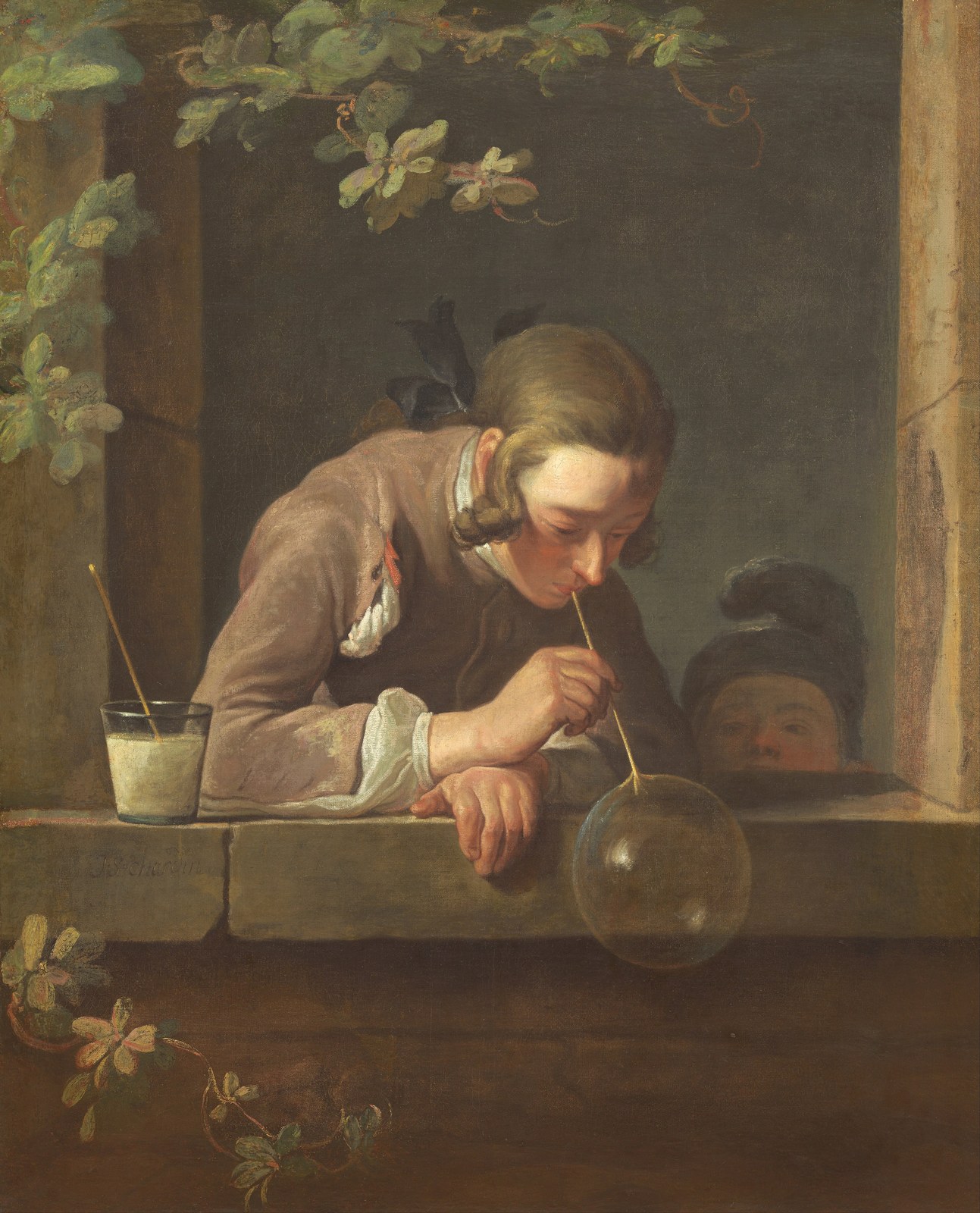
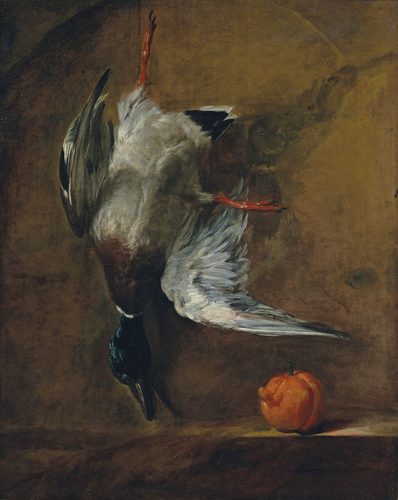
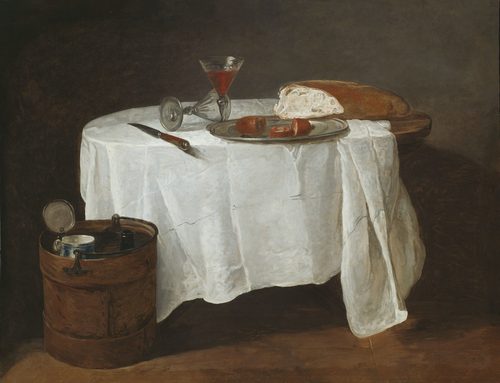
Jean-Siméon Chardin (1699–1779) was a French painter who elevated humble subjects — kitchen still lifes and quiet scenes of domestic life — into some of the most admired paintings of eighteenth-century France, proving that grandeur didn't require myth or nobility.
Born in Paris to a cabinetmaker, Chardin trained under Pierre-Jacques Cazes and Noël-Nicolas Coypel but developed a method largely his own, building up color in patient, deliberate layers rather than following academic drawing-first convention. In 1728 he was admitted to the Académie Royale on the strength of The Ray, a still life so assured that Denis Diderot later wrote about his work with unusual devotion, praising its truth to nature.
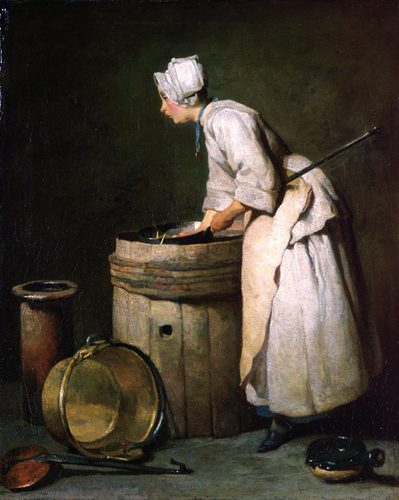
Chardin worked in two closely related modes: still lifes of pots, jugs, and food, and genre scenes of children and servants absorbed in quiet tasks — soap bubbles, house-of-cards games, saying grace before a meal. Both share the same hushed attention to light and surface.
He held administrative posts at the Académie for decades, overseeing Salon installations. Late in life, failing eyesight pushed him toward pastel, in which he produced remarkably direct self-portraits shortly before his death in Paris in 1779.
How to recognize a Chardin
Humble kitchen objects
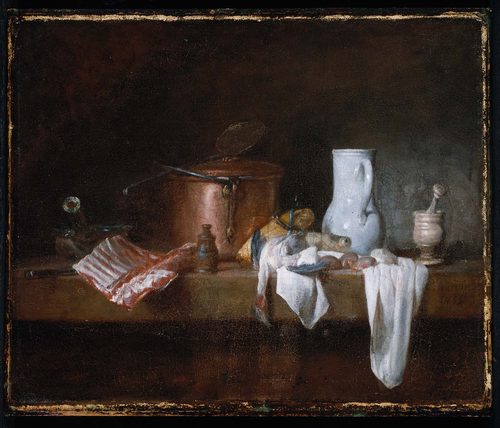
Copper pots, earthenware jugs, loaves of bread, and simple produce appear again and again, painted with the same seriousness other artists reserved for grand allegory or portraiture.
Thick, built-up paint
Chardin applied paint in patient layers and visible touches rather than smooth blending, giving surfaces — glazed pottery, bread crust, fruit skin — a tangible, almost sculptural presence.
Hushed domestic scenes
Children and servants absorbed in quiet tasks — blowing bubbles, building card houses, saying grace — appear caught mid-moment, unposed and unaware of being watched.
Muted, tonal color
His palette favors soft browns, grays, and warm whites over bright hues, unifying each composition through close tonal relationships rather than contrast or drama.
Careful compositional balance
Objects are arranged with quiet, deliberate geometry — a jug beside a loaf, a ladle at an angle — so the eye settles rather than searches for a focal point.
Soft, diffused light
Light falls evenly and gently across his scenes, without theatrical spotlighting, lending even the plainest kitchen corner a calm, contemplative glow.
The life
Jean-Siméon Chardin was born in Paris in 1699, the son of a cabinetmaker who built billiard tables for a wealthy clientele. He trained under the history painters Pierre-Jacques Cazes and Noël-Nicolas Coypel but never fully adopted the academic emphasis on drawing and grand narrative subjects, developing instead a slower, more observational method built through color and layered paint.
His still life The Ray, exhibited in 1728, secured his admission to the Académie Royale, which classified him formally as a painter of animals and fruit — a lower rank than history painting, though Chardin's reputation soon exceeded that hierarchy. Denis Diderot, the era's most influential critic, became one of his most devoted admirers, returning to Chardin's work in Salon review after Salon review.
Chardin balanced painting with significant administrative responsibility at the Académie, eventually serving as its treasurer and overseeing the installation of the Salon exhibitions for many years, a role he carried out with notable care. He received a royal pension and lodging in the Louvre.
Later in life, failing eyesight made oil painting increasingly difficult, and Chardin turned to pastel, producing a series of searching self-portraits and portraits of his wife. He died in Paris in 1779, still working almost to the end.
Timeline
- 1699Born in Paris, son of a cabinetmaker
- 1724Admitted to the Académie de Saint-Luc
- 1728Elected to the Académie Royale on the strength of The Ray
- 1731Marries Marguerite Saintard
- 1740Presents Saying Grace to King Louis XV
- 1755Becomes treasurer of the Académie Royale
- 1770Turns increasingly to pastel as his eyesight fails
- 1779Dies in Paris
Most famous works
| Work | Date | Why it matters |
|---|---|---|
| The Ray | 1728 | His dramatic Académie reception piece, a kitchen still life built around a gutted, glistening skate. |
| Saying Grace | 1740 | A mother and children pause before a meal; presented to Louis XV and widely reproduced as an engraving. |
| Boy Building a House of Cards | c. 1735 | A child absorbed in quiet concentration, painted with the same gravity Chardin gave a copper pot. |
| Soap Bubbles | c. 1733–34 | A young man blows a bubble in still concentration, a meditation on fragility rendered without sentimentality. |
| A Basket of Wild Strawberries | 1761 | A late, spare still life prized for its restraint, later achieving a record auction price centuries on. |
 AI-generated
Create in the same spirit
Make Rococo art of your own
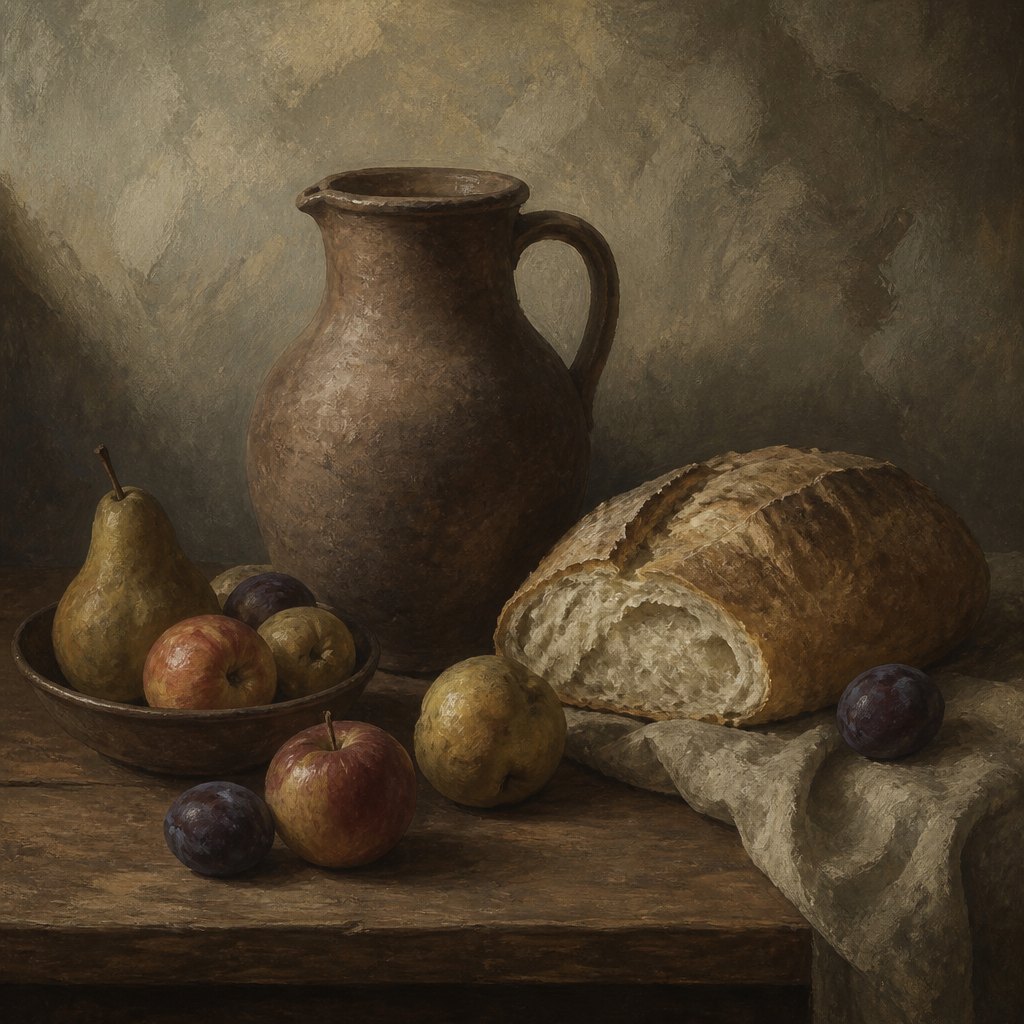
This AI interpretation echoes the aesthetic world Jean-Siméon Chardin worked in — it depicts no real artwork. Generate your own with the Rococo Art Style generator.
Open the Rococo Art Style generator →Legacy
Chardin proved that still life and quiet domestic genre painting could carry the same seriousness as history painting, a claim French academic hierarchy had long resisted. Denis Diderot's enthusiastic Salon writing helped cement that argument for his contemporaries, and later generations of painters — Édouard Manet, Paul Cézanne, and Henri Matisse among them — studied his tonal restraint and material honesty closely.
His influence runs through the entire tradition of modern still life: any painter who trusts a plain object, rendered patiently and without embellishment, to hold a viewer's attention owes something to Chardin. His work remains a touchstone for painters interested in light, surface, and the dignity of ordinary things.
Frequently asked questions
What is Jean-Siméon Chardin famous for?
Chardin is famous for still lifes of humble kitchen objects and quiet genre scenes of domestic life, painted with remarkable tonal subtlety. He proved that ordinary subjects, handled with enough seriousness, could rival grand history painting in prestige.
Where can I see Chardin's paintings?
The Louvre in Paris holds the largest collection of his work, including The Ray and Saying Grace. Major examples also hang in the National Gallery in London, the Metropolitan Museum in New York, and the National Gallery of Art in Washington.
What art movement did Chardin belong to?
Chardin worked during the French rococo period but largely stood apart from its decorative, aristocratic themes, instead developing a quieter, more observational realist style centered on still life and domestic genre scenes.
Why did Chardin start painting pastels late in life?
As Chardin aged, the fumes and physical demands of oil painting became harder to manage and his eyesight weakened, so he turned to pastel, producing direct, searching self-portraits and portraits of his wife in his final years.