 Famous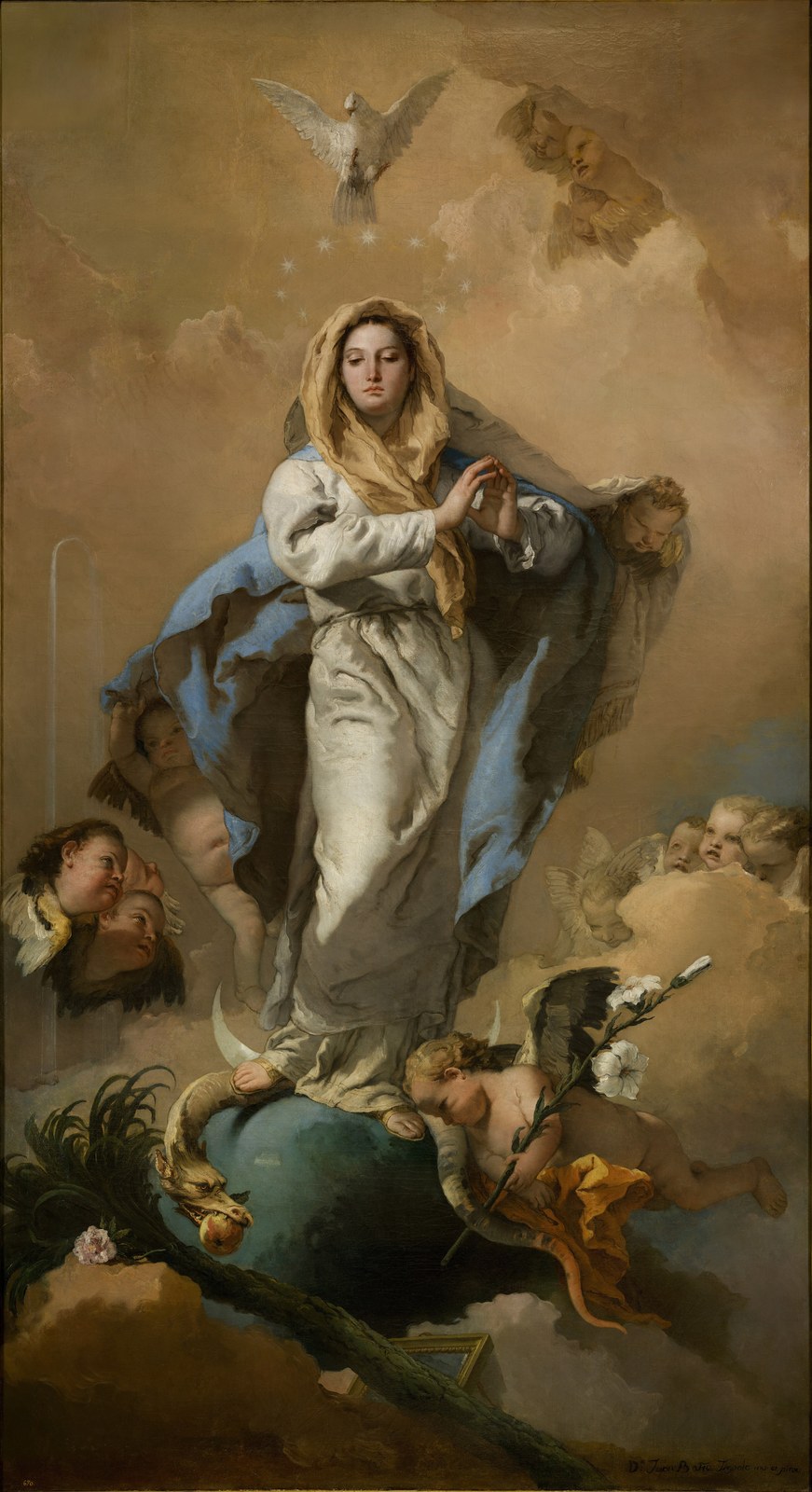

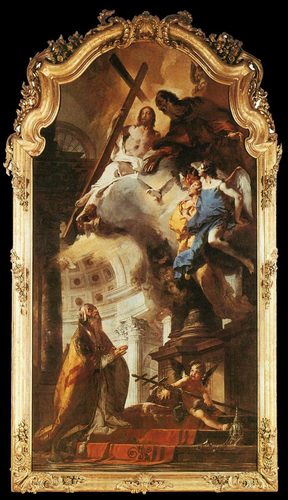
Giovanni Battista Tiepolo (1696–1770) was a Venetian painter whose vast, luminous ceiling frescoes made him the most sought-after decorative artist in eighteenth-century Europe, closing out the grand tradition of Italian illusionistic ceiling painting.
Trained in Venice under Gregorio Lazzarini, Tiepolo developed rapidly, absorbing the color and drama of Veronese while pushing perspective illusion — figures and architecture seeming to open directly into real sky — further than his predecessors. He married Cecilia Guardi, sister of the view painters Francesco and Giovanni Antonio Guardi, and their son Giandomenico became his frequent collaborator and eventual successor.
His reputation soon spread beyond Venice. Commissions took him across northern Italy before his most celebrated foreign project: the ceiling and staircase frescoes of the Würzburg Residenz in Germany, painted between 1750 and 1753 for the prince-bishop, still considered among the largest and most ambitious fresco cycles ever completed.
In 1762 King Charles III of Spain summoned him to Madrid to decorate the new Royal Palace. Tiepolo spent his final years there, completing major ceilings including an allegorical glorification of the Spanish monarchy, even as taste at court increasingly favored the cooler neoclassicism of rivals like Anton Raphael Mengs. He died in Madrid in 1770.
How to recognize a Tiepolo
Illusionistic open skies
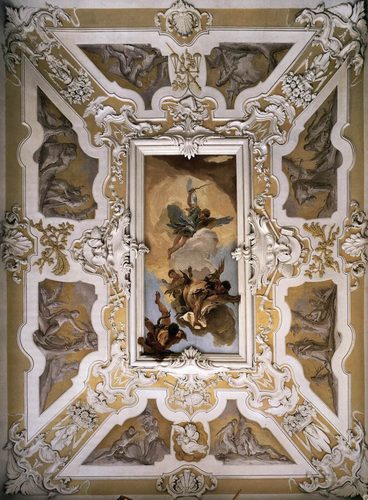
Tiepolo painted ceilings so figures and clouds appear to float in real open air above the viewer, using steep foreshortening to dissolve the boundary between architecture and painted illusion.
Luminous, sun-bleached color
His palette favors bright, high-key color — golden light, pale blues, warm tones — giving even crowded, complex scenes an airy brightness rare in earlier Baroque ceiling painting.
Dramatic upward foreshortening
Figures are viewed sharply from below, foreshortened and tumbling toward the viewer, a technique inherited from Baroque ceiling painting that Tiepolo pushed to new heights of daring.
Grand allegorical subjects
Continents, virtues, and historical rulers appear in sweeping allegorical programs celebrating patrons and princes, staged with theatrical confidence across enormous painted surfaces.
Fluid, rapid brushwork
Up close his surfaces are loose and economical, built from quick, confident strokes that only resolve into crisp detail from the intended distance below.
Exotic costume and staffage
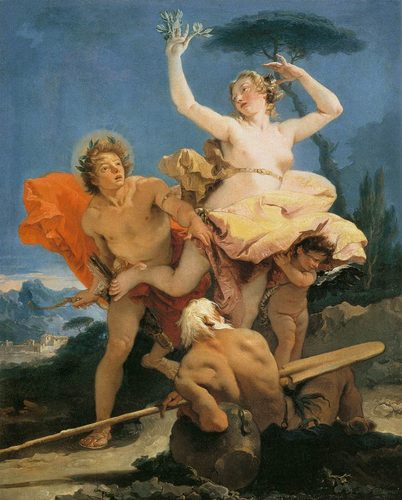
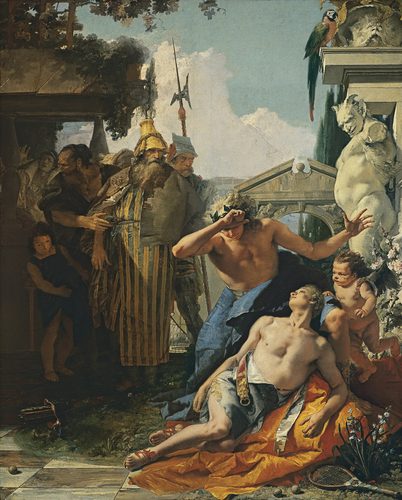
Turbaned attendants, plumed helmets, and richly patterned fabrics fill his compositions, reflecting Venice's long trading contact with the wider Mediterranean and beyond.
The life
Giovanni Battista Tiepolo was born in Venice in 1696 and trained in the studio of Gregorio Lazzarini, though he quickly moved beyond his teacher's more restrained style toward the bolder color and drama of earlier Venetian masters like Paolo Veronese. By his twenties he was already receiving major commissions for church and palace decoration across the Veneto.
He married Cecilia Guardi in 1719, linking him to the Guardi family of painters; his own son Giandomenico became a skilled painter in his own right and worked alongside him on major projects for decades. Tiepolo's fame spread through the 1730s and 1740s via commissions in Milan, Bergamo, and Venice, including the frescoes of the Palazzo Labia depicting the story of Antony and Cleopatra.
His largest and most celebrated achievement came in Germany: between 1750 and 1753, he decorated the grand staircase and Kaisersaal of the Würzburg Residenz for the prince-bishop Carl Philipp von Greiffenclau, producing what is still considered one of the largest fresco cycles ever painted.
In 1762 Charles III of Spain called him to Madrid to decorate the new Royal Palace. Tiepolo worked there for the rest of his life, completing major ceilings even as royal taste shifted toward the neoclassical style favored by rivals at court. He died in Madrid in 1770.
Timeline
- 1696Born in Venice
- 1719Marries Cecilia Guardi, sister of painters Francesco and Antonio Guardi
- 1726Frescoes the Archbishop's Palace in Udine
- 1747Frescoes the Palazzo Labia in Venice
- 1750Begins the Würzburg Residenz fresco commission in Germany
- 1753Completes the Würzburg ceiling frescoes, returns to Venice
- 1762Travels to Madrid to work for King Charles III
- 1770Dies in Madrid
Most famous works
| Work | Date | Why it matters |
|---|---|---|
| Frescoes of the Archbishop's Palace, Udine | c. 1726 | An early major fresco cycle that established his reputation beyond Venice. |
| The Banquet of Cleopatra (Palazzo Labia frescoes) | c. 1747 | A grand narrative fresco cycle staging Antony and Cleopatra's story with theatrical splendor. |
| Allegory of the Planets and Continents | 1752–53 | The Würzburg Residenz staircase ceiling, among the largest frescoes ever painted, honoring the prince-bishop. |
| Apotheosis of Spain | 1764 | A Royal Palace throne room ceiling in Madrid, allegorically glorifying the Spanish monarchy. |
| The Immaculate Conception | 1767–69 | A late altarpiece painted in Spain, now in the Prado, showing his continued command of luminous color. |
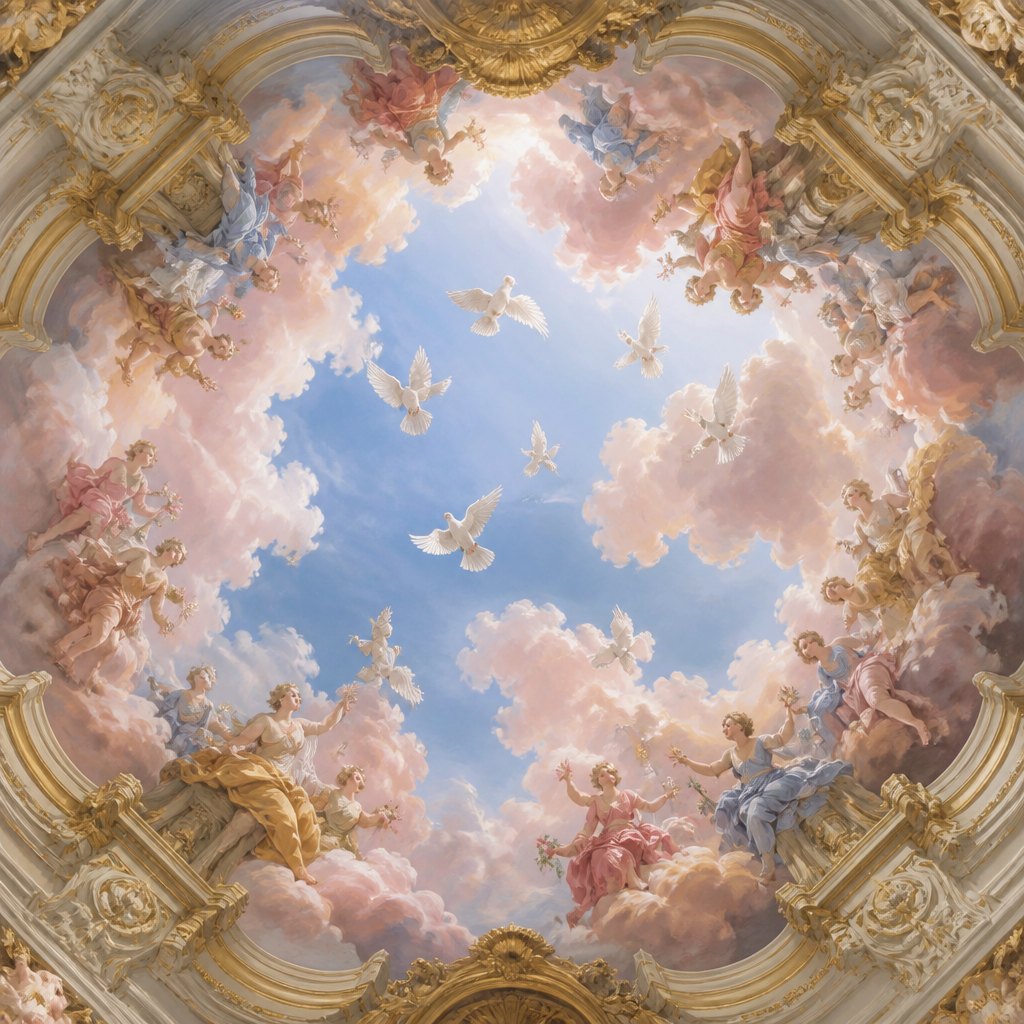 AI-generated
Create in the same spirit
Make Rococo art of your own
This AI interpretation echoes the aesthetic world Giovanni Battista Tiepolo worked in — it depicts no real artwork. Generate your own with the Rococo Art Style generator.
Open the Rococo Art Style generator →Legacy
Tiepolo is generally regarded as the last great master of the European ceiling fresco, a tradition stretching back through Baroque Rome to Correggio and beyond. After him, changing taste and the rise of neoclassicism largely ended large-scale illusionistic ceiling painting as a living art form, making his late Spanish commissions something of a final chapter for the entire genre.
His son and collaborator Giandomenico Tiepolo carried elements of his style forward, and his prolific etchings, especially the Capricci and Scherzi series, influenced printmakers long after his frescoes went out of fashion. Today his surviving cycles in Venice, Würzburg, and Madrid remain essential destinations for anyone studying eighteenth-century decorative painting.
Frequently asked questions
What is Giovanni Battista Tiepolo famous for?
Tiepolo is famous for vast illusionistic ceiling frescoes painted across Italy, Germany, and Spain, using dramatic perspective and luminous color to make painted skies and figures seem to open directly above the viewer. He is often called the last great ceiling painter.
Where can I see Tiepolo's work?
His largest surviving fresco cycles remain in place at the Würzburg Residenz in Germany and the Royal Palace in Madrid. Venice retains major works including the Palazzo Labia frescoes, and museums such as the Prado and the Met hold paintings and drawings.
What art movement did Tiepolo belong to?
Tiepolo worked at the height of the late Baroque and rococo periods, combining Baroque ceiling illusionism with rococo lightness of color and touch. He is considered the culminating figure of the Venetian decorative fresco tradition.
Why did Tiepolo go to Spain?
King Charles III of Spain invited Tiepolo to Madrid in 1762 to decorate the new Royal Palace. Tiepolo spent his final years there completing major ceiling frescoes, even as court taste increasingly favored the neoclassical style of rival painters.