 Famous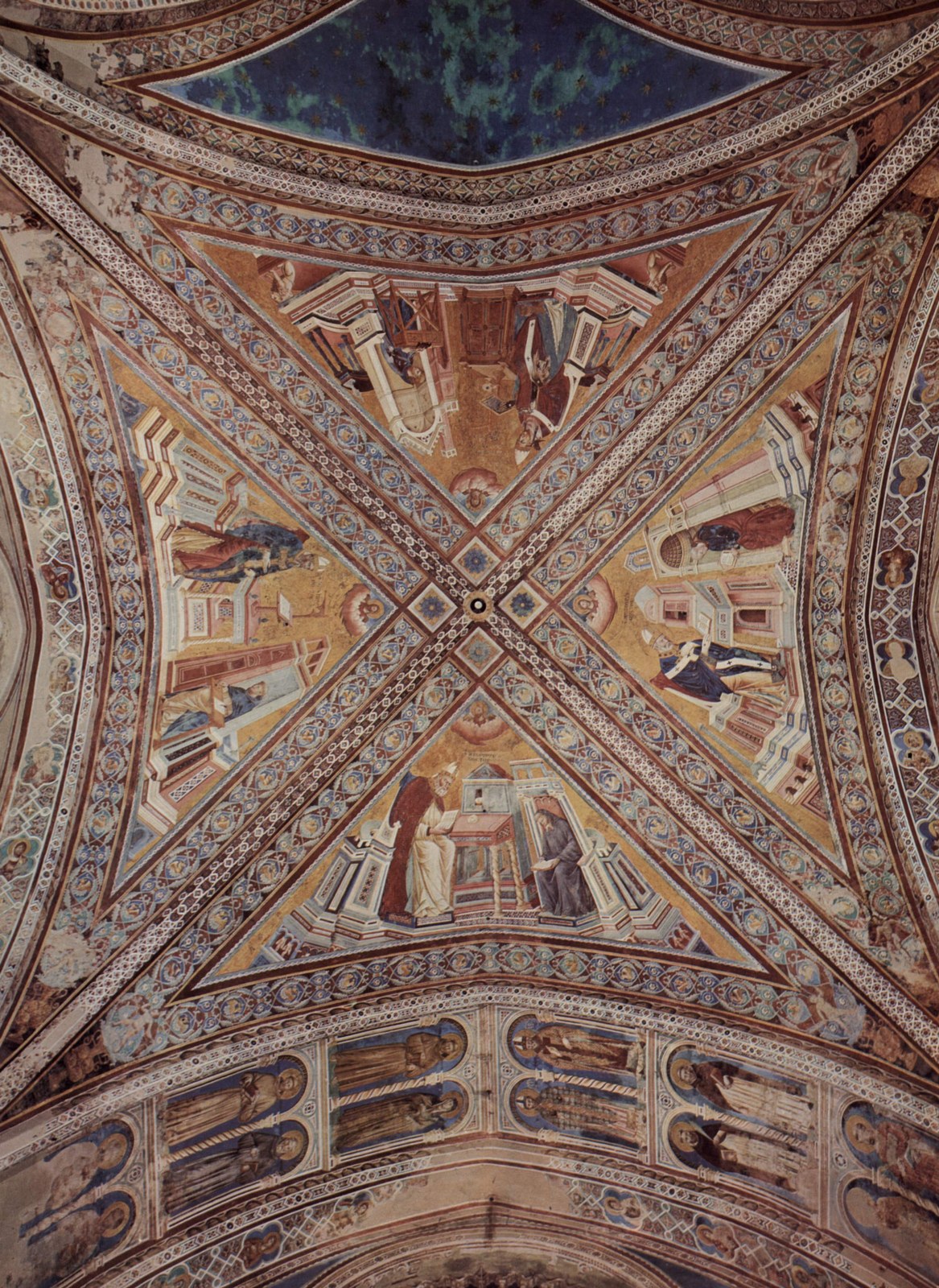
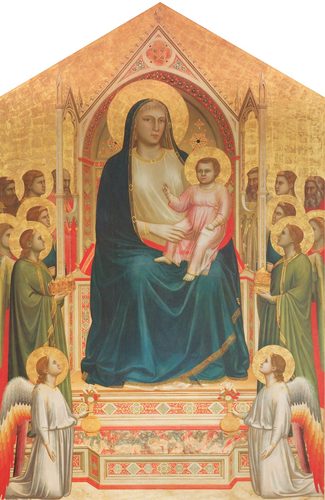
Giotto di Bondone (c. 1267–1337) was a Florentine painter and architect whose frescoes gave Western art its first convincing sense of solid, weighted human beings, breaking from the flat gold-ground icons of the Byzantine tradition that had dominated painting for centuries.
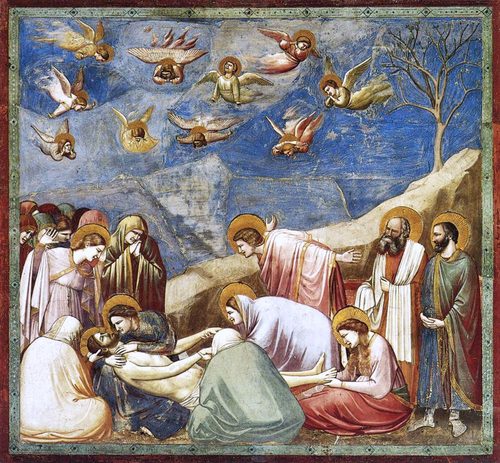
Tradition holds that he trained under the painter Cimabue, and he spent his career moving between Florence, Assisi, Padua, and Rome. His masterpiece is the Scrovegni Chapel in Padua, where he covered the walls with a fresco cycle on the lives of the Virgin and Christ. In scenes like the Lamentation, mourning figures huddle with real anatomical bulk, their faces carrying grief, anger, and tenderness, a vocabulary of human emotion painting had largely abandoned.
He also worked as an architect, designing the campanile of Florence Cathedral, and was famous in his own time: Dante placed him in the Divine Comedy as a painter who had already outshone his teacher. Later writers, above all Giorgio Vasari, credited him as the founder of Italian painting, the artist who reopened a door that the Renaissance, more than a century later, would walk through.
How to recognize a Giotto
Sculptural, weighted figures
Giotto's people have real mass: thick necks, solid shoulders, robes that fall in heavy, believable folds instead of decorative Byzantine ripples. Bodies occupy space and cast shadow, giving even a crowded scene a sense of physical weight and gravity.
Faces that carry emotion
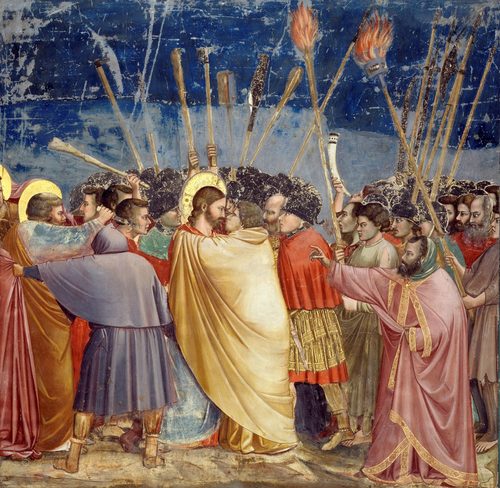
Where earlier icon painters gave every face the same serene mask, Giotto individualized expression: grief tightens a mouth, anger narrows the eyes, tenderness softens a brow, so feeling reads instantly from figure to figure across a scene.
Blue skies over gold
Giotto favored a deep, lapis-toned sky instead of the flat gold backgrounds common in earlier panel painting, setting his scenes in an implied outdoor world rather than a timeless, weightless devotional void.
Simplified, stagelike settings
Buildings and landscapes appear as spare, blocky forms, just enough architecture or rock to anchor a scene and direct the eye, never elaborate for its own sake, so nothing competes with the figures' drama.
Gesture as narrative device
Hands, turned heads, and pointing fingers do real storytelling work in Giotto's compositions, linking figures across a scene and guiding the viewer's eye through the action, much like a director blocking a stage.
Compact, frieze-like grouping
Figures cluster in tight, low horizontal bands across the wall, arranged like a frieze rather than scattered through deep space, keeping the emotional focus close, legible, and immediate even from a distance.
The life
Giotto was likely born around 1267 in the countryside near Florence. Later legend has the painter Cimabue discovering him as a shepherd boy sketching sheep on a rock; the story is charming but undocumented. Tradition, though no document, places him in the 1290s at work on the fresco cycle in the upper basilica of San Francesco in Assisi, absorbing the new naturalism of Roman painters while developing a firmer, more sculptural style of his own.
His breakthrough came around 1305, when the Paduan banker Enrico Scrovegni hired him to fresco a private chapel built beside his family palace. The Scrovegni Chapel, painted top to bottom with scenes from the lives of Mary and Christ, became the single most influential fresco cycle of the early fourteenth century, studied by nearly every major Florentine painter who followed.
In his later years Giotto ran a large workshop, painted for the papal court and the Angevin kings of Naples, and in 1334 was named chief architect of Florence Cathedral, designing the base of the bell tower that still carries his name. He died in Florence in January 1337, already celebrated by his contemporaries as the painter who had restored art to nature.
Timeline
- 1267Born in the Mugello countryside near Florence
- 1290Frescoes the upper basilica of San Francesco in Assisi
- 1305Completes the Scrovegni Chapel frescoes in Padua
- 1311Recorded in Florence as its leading painter
- 1328Enters the service of King Robert of Naples
- 1334Named chief architect of Florence Cathedral
- 1337Dies in Florence
Most famous works
| Work | Date | Why it matters |
|---|---|---|
| Scrovegni Chapel Frescoes | c. 1303-1305 | A full cycle on the lives of Mary and Christ that reinvented fresco painting for depth, weight, and emotion. |
| Ognissanti Madonna | c. 1310 | A monumental enthroned Madonna whose solid, three-dimensional body startled viewers used to flatter, gold-ground icons. |
| Bardi Chapel Frescoes | c. 1325 | Scenes from the life of Saint Francis painted in Santa Croce for the Bardi banking family. |
| Campanile di Giotto | designed 1334 | The marble bell tower of Florence Cathedral he designed as its chief architect, finished after his death. |
| Crucifix, Santa Maria Novella | c. 1290-1300 | An early painted crucifix in which Giotto let Christ's body sag with real, believable weight. |
 AI-generated
Create in the same spirit
Make Proto Renaissance art of your own
This AI interpretation echoes the aesthetic world Giotto worked in — it depicts no real artwork. Generate your own with the Renaissance Religious Art generator.
Open the Renaissance Religious Art generator →Legacy
Giotto is usually called the first Renaissance painter, though he worked a century before the word existed. By giving figures mass, gravity, and legible emotion, he handed later painters, from Masaccio to Michelangelo, a vocabulary to build on. Vasari's Lives gives Giotto pride of place precisely because Florentine painters kept returning to the Scrovegni Chapel to study how he built a scene: bodies in real space, faces that carry feeling instead of formula. You feel him today whenever a painting asks you to read a figure's posture as much as its symbol, whenever grief or tenderness registers on a face rather than in a halo.
Frequently asked questions
What is Giotto famous for?
Giotto is famous for breaking from flat Byzantine icon painting to give figures real weight, depth, and emotion, especially in the Scrovegni Chapel frescoes in Padua. He is widely regarded as the painter who made Western art feel human again.
Where can you see Giotto's work today?
His greatest surviving cycle is the Scrovegni Chapel in Padua. Other major works remain in the Basilica of Santa Croce and the Uffizi in Florence, and the Basilica of San Francesco in Assisi, though the Assisi attribution is still debated.
What movement did Giotto belong to?
Giotto worked before formal art movements existed, but historians place him at the head of the proto-Renaissance, the pre-1400 shift toward naturalism that set the stage for the Italian Renaissance a century later.
Did Giotto really train under Cimabue?
Tradition says yes, though the link is not fully documented. Cimabue was Florence's leading painter when Giotto was young, and early sources connect the two, but the tale of a shepherd-boy discovery is likely legend.